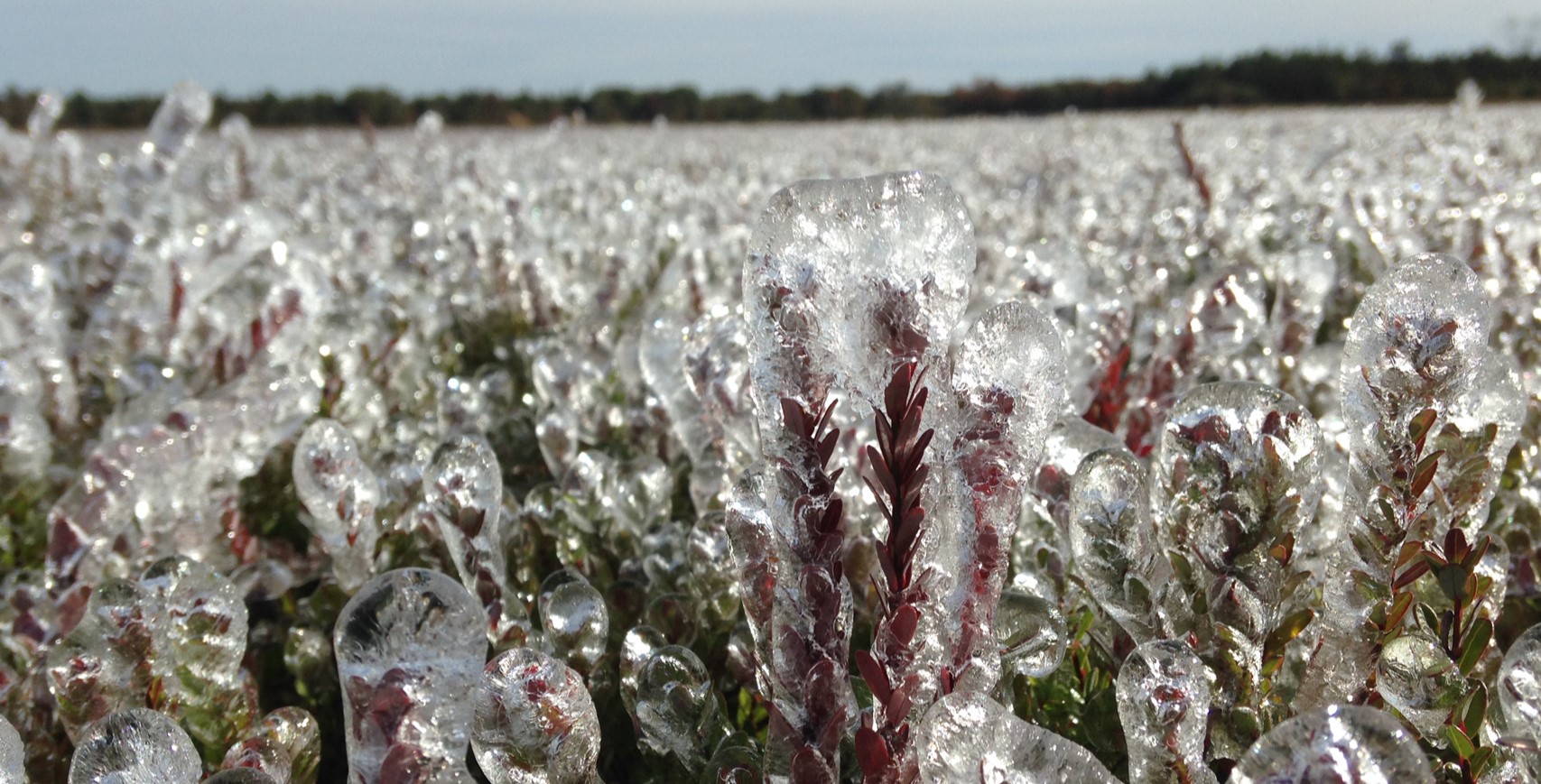
In Quebec, winter flooding of cranberry fields is an essential cultural practice, closely linked to plant survival and crop productivity in the following year.
This intervention primarily aims to protect floral and vegetative buds that formed as early as the previous summer.
These buds, already present on the vines at the onset of winter, are critical because they directly determine the number of flowers and, subsequently, fruit during the next growing season.
Although cranberry plants enter dormancy in the fall, they are not completely insensitive to winter conditions. While dormant tissues can tolerate low temperatures, buds become vulnerable during extreme cold events, particularly when temperatures fall below critical thresholds for extended periods, or during repeated freeze–thaw cycles combined with wind exposure. Winter flooding creates a natural insulating layer that stabilizes temperatures at the vine canopy where the buds are located, reduces direct exposure to cold, and limits the risks of desiccation and winter injury.
 Ice formation generally begins between late November and mid-December, when weather forecasts call for sustained and consistent freezing conditions. Water is gradually applied to form a uniform ice cover across the entire field. Some operations introduce a larger volume of water from their retention ponds in a single application, while others prefer to add smaller amounts repeatedly so that the vines become encased in ice more quickly. The target ice thickness depends on the winter operations planned.
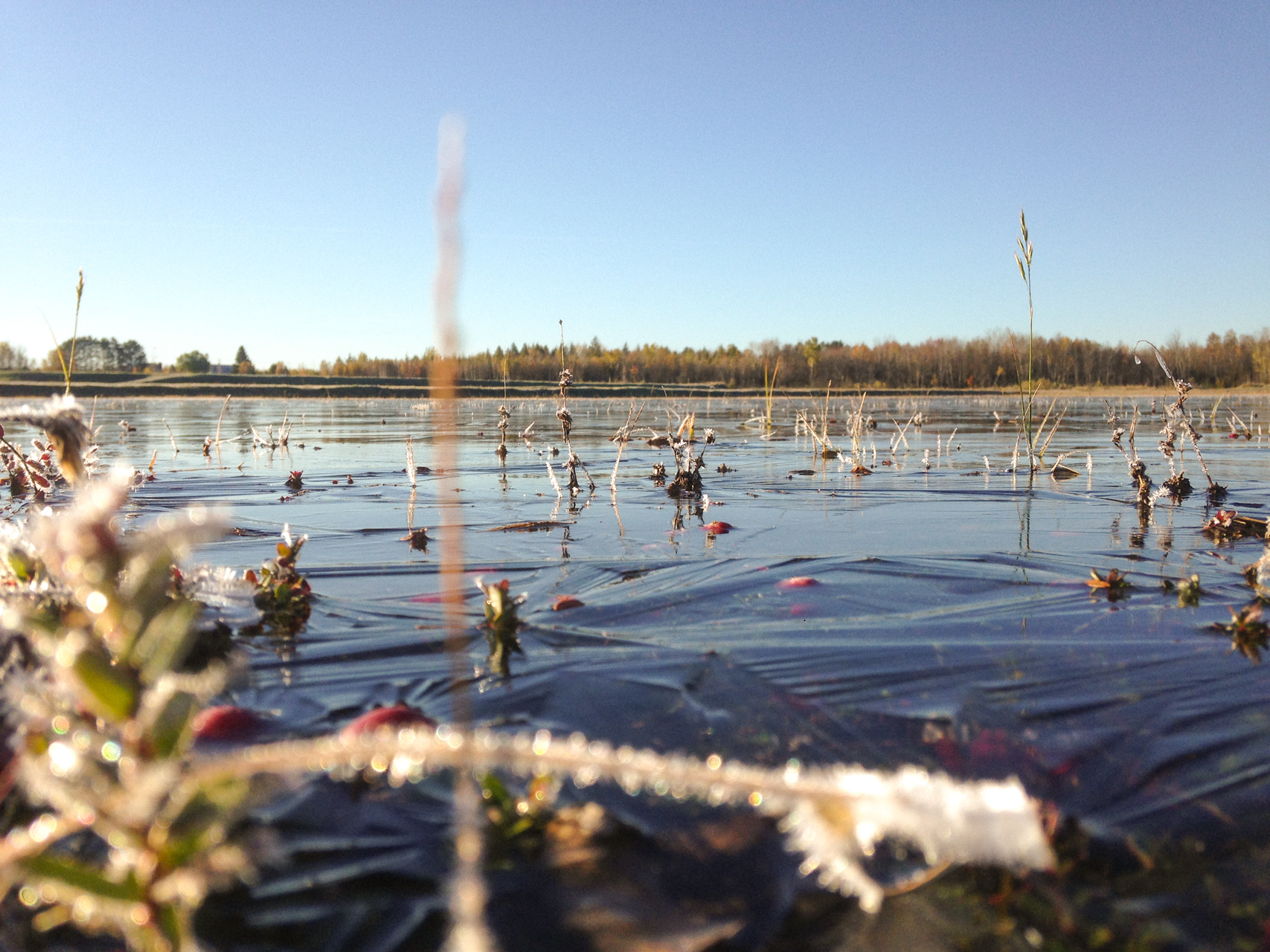
In fields that will not be sanded, an ice thickness of 6 to 8 inches is usually sufficient to ensure adequate plant protection.
In contrast, fields intended for sanding require a greater ice thickness, typically 10 to 12 inches, to obtain ice strong enough to safely support the machinery used during sanding operations.
Ice quality is just as important as ice thickness. When heavy snowfall occurs during the flooding period, there is a risk of forming weak, friable ice, especially if water does not enter the field quickly enough to absorb and melt the snow. This situation is particularly problematic in large fields, where water movement may be slower. Snow trapped between ice layers prevents proper fusion, resulting in stratified ice with poor load-bearing capacity. Under these conditions, the ability of the ice to support machinery is compromised, making sanding risky or even impossible.

Sanding of cranberry fields is generally carried out between January and March, when the ice is sufficiently thick, strong, and stable.
In spring, as the ice melts, the sand settles onto the vines. Temperature fluctuations throughout the winter season can complicate sanding operations when warmer conditions degrade ice quality in the field. This practice, which has been used in cranberry production for more than a century, serves several important agronomic functions. Sanding is not performed every year, but rather on a general cycle of once every 3 to 5 years.
From a horticultural standpoint, sanding acts as an indirect pruning method. By partially covering the horizontal stems (stolons), sand limits the accumulation of older, less productive wood while encouraging the renewal of new, fruit-bearing shoots. Stems covered by sand tend to produce new roots within this layer, bringing the buds closer to the root system. This proximity improves water and nutrient uptake in the spring, thereby contributing to greater plant vigor.
Sanding also helps improve soil drainage and aeration over the medium term. The coarse sand used in this operation has a structure that promotes air and water movement compared to a dense organic layer. Improved soil oxygenation benefits roots, which remain alive even during winter dormancy, and supports a healthier root environment over the long term.
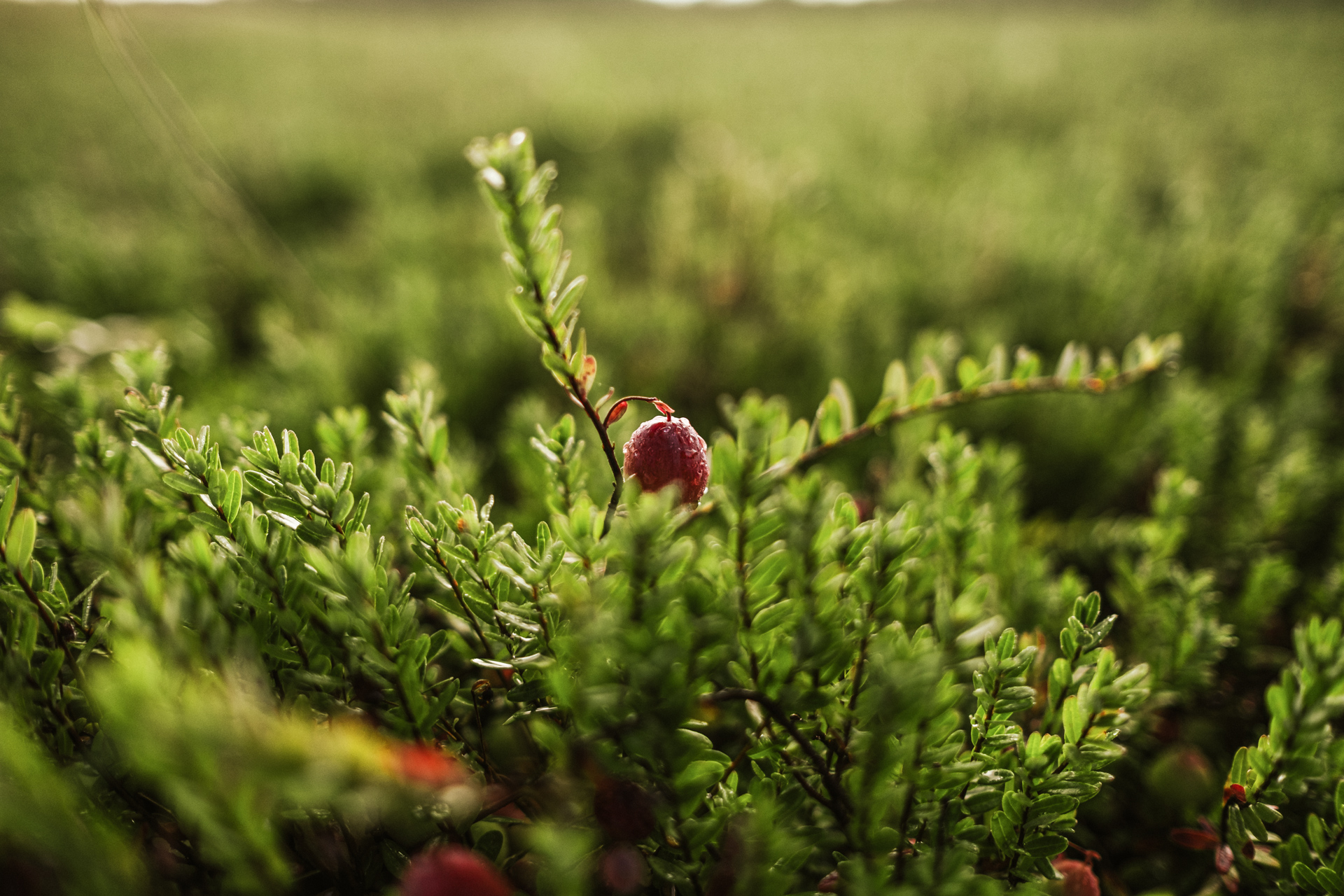
From a phytosanitary perspective, sanding can also contribute to the management of certain insect pests and weeds by increasing mortality of some overwintering stages, particularly those that survive less effectively in a sand layer than in organic matter. However, these effects are generally temporary and should be considered a complementary benefit rather than a stand-alone control method.
The thickness of the applied sand is a key factor in the success of this practice. In general, a layer of approximately ¾ to 1 inch of sand is recommended. An insufficient thickness limits medium-term benefits, while an excessively thick layer can lead to reduced yields in the year of sanding, as plants require time to adapt. Choosing the appropriate thickness therefore involves balancing expected agronomic benefits, sanding frequency, and economic considerations.
Finally, winter flooding and sanding are two closely linked practices that must be planned in a complementary manner. High-quality ice of adequate thickness is an essential prerequisite for safe and effective sanding. When properly executed, these winter operations help maintain field longevity, plant vigor, and yield stability in a demanding climatic context such as that of Quebec.
It’s the simple everyday things that make our berries so tender, tasty, healthy and give them the perfect texture. Each parcel of land we farm with care and respect. Each extra day we wait to ensure crops are harvested at peak ripeness. Each minute saved between field and freezer. Each berry perfectly preserved. Each unwanted substance detected and eliminated. And each delicious bite our customers enjoy.