
December 1st, 2025
The global cranberry harvest is down by about 10% compared to last year, with results varying by region. In the United States, quality is uneven, while Quebec stands out for its remarkable quality, supported by favorable weather conditions and promising varieties.
For organic production, the season is more favorable than last year, but supply remains extremely limited with volumes similar to last year, confirming the scarcity of this premium segment.
Harvest by Region
Quebec: The province reports a harvest comparable to last year. Potentials were high in fall 2024 thanks to a significant number of buds. Favorable weather and optimal pollination supported a good number of berries per stem. Thanks to a dry summer, fruit quality is outstanding: very little rot, superior firmness, and smaller sizes compared to last year. Pest pressure in organic production was also lower than in recent years, helping stabilize yields in this segment. In short, fruit quality, both in conventional and organic production, confirms Quebec’s role as a key player this year.
British Columbia: The province is showing strong performance with a harvest exceeding last year’s. This progress strengthens the regional contribution to Canada’s supply, without altering overall availability, which remains limited.
New Brunswick: Despite promising early-season potential, the region faced significant drought throughout the productive period. The lack of water limited fruit sizing and made harvest operations particularly challenging.
Wisconsin: The harvest is lower than in the previous year, partly due to the biennial nature of dominant varieties such as Stevens and Ben Lear, which delivered strong production last year. Potential was therefore limited from the start of the season. Early cold nights triggered premature dormancy, slowing fruit sizing and reducing average weight, which impacted overall volume. Severe autumn frosts further accentuated this decline. Finally, fruit quality, particularly firmness and rot resistance, is also less favorable this year for processing in this region.
Massachusetts: The harvest was lower than last year due to winter damage that left persistent effects, compounded by early-summer drought. However, improved conditions in August allowed for some growth recovery. While winter damage was significant, it was less severe than expected, preventing a major drop in yields. The result is a harvest weaker than last year but better than the pessimistic forecasts at the start of the season.
Market Situation
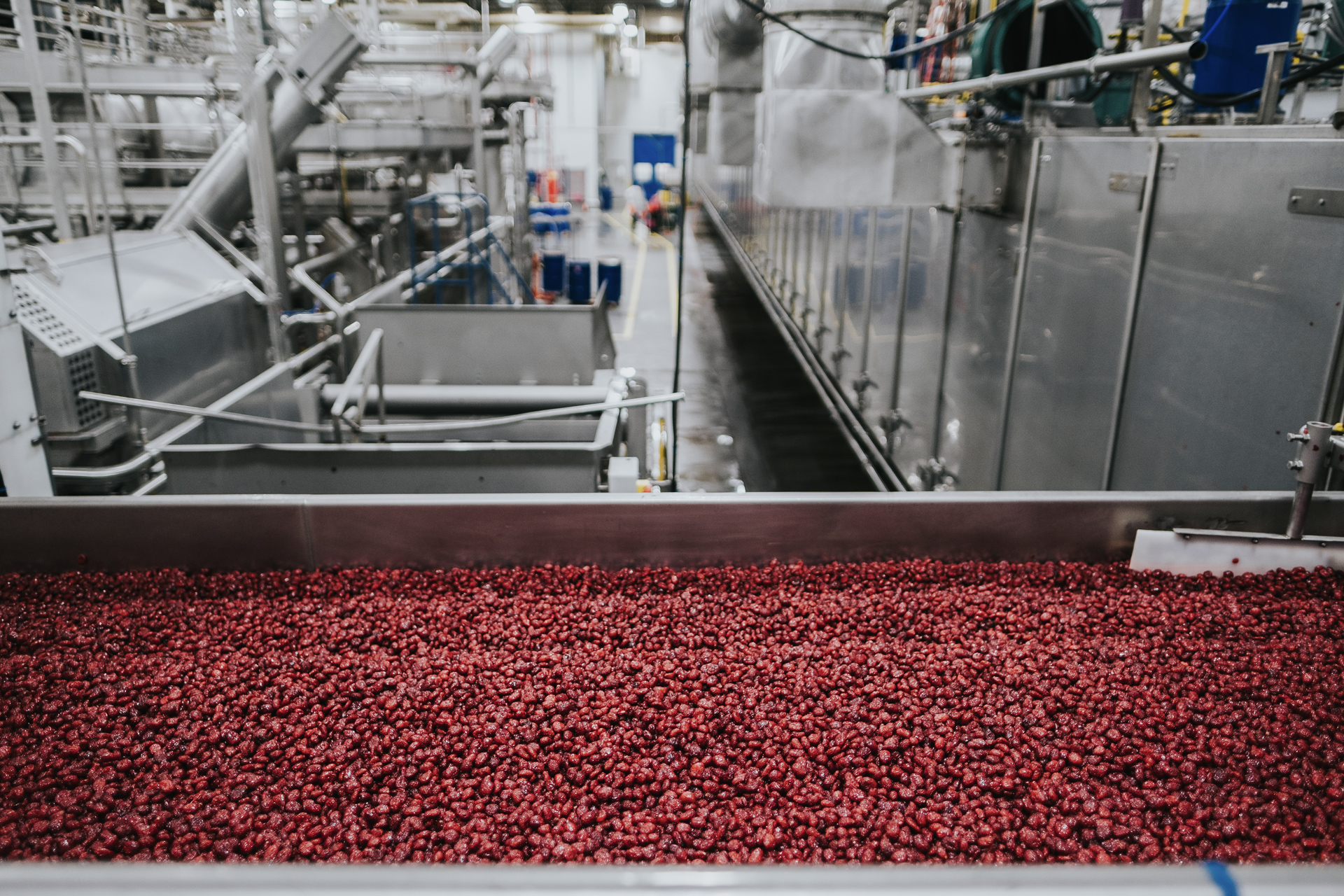
Dried Cranberries: Despite growing demand, supply remains constrained by global drying capacity, which is currently at full capacity.
Juice and Concentrate: Demand for juice and concentrate appears to be rising, driven by poor harvests of other small fruits similar to cranberries. Prices, meanwhile, are stabilizing in the market. This is a strategic opportunity for buyers to secure their annual volumes and ensure supply continuity.
Organic: With a very low starting inventory and a harvest comparable to last year, rising demand is putting additional pressure on the market. The result: an extremely limited supply, confirming the current scarcity.
In summary, despite regional disparities, Quebec’s exceptional quality and strong demand confirm the market’s resilience. Players who anticipate needs for processed and organic products will benefit from this favorable context.
It’s the simple everyday things that make our berries so tender, tasty, healthy and give them the perfect texture. Each parcel of land we farm with care and respect. Each extra day we wait to ensure crops are harvested at peak ripeness. Each minute saved between field and freezer. Each berry perfectly preserved. Each unwanted substance detected and eliminated. And each delicious bite our customers enjoy.